| Size | Trade Gallons, Two Gallons, Three Gallons |
|---|
Amsonia hubrichtii – Threadleaf Bluestar(B&B.DR.DRGHT.FC.H.HMR.MTH.OP.RR.SHWY)
$15.00
Ecosystem Services:
(B)-Birds (B&B)-Birds & Butterflies
(BTF)-Butterflies (BW)-Black Walnut Resistant
(DR)-Deer Resistant (DRGHT)-Drought Resistant
(EC)-Erosion Control (EVR)-Evergreen
(FC)-Fall Color (FRG)-Fragrant
(GRD)-Groundcover (H)-Host plant
(HMR)-Hummingbirds (M)-Mammals
(MTH)-Moths (N)-Nectar
(NB)-Native Bees (NST)-Nesting Material
(OP)-Other pollinators (RR)-Rabbit Resistant
(SHWY)-Showy (SPC)-Specimen Plant
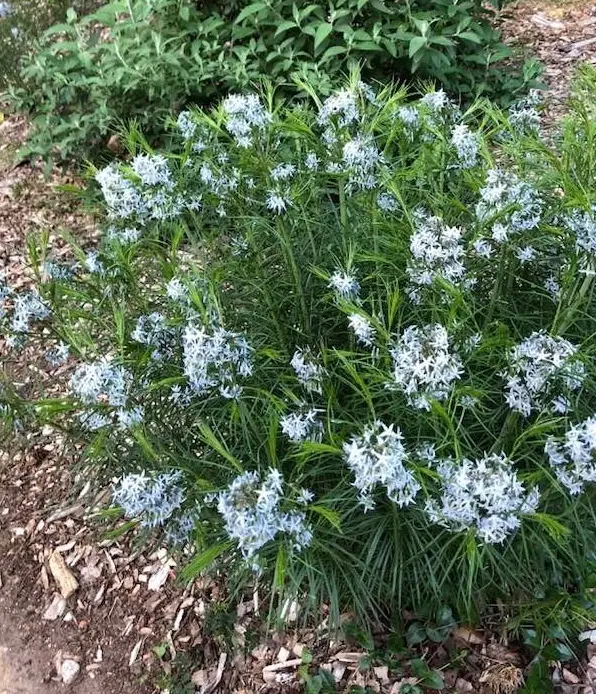
Blue star is an uncommon herbaceous perennial in the dogbane family.
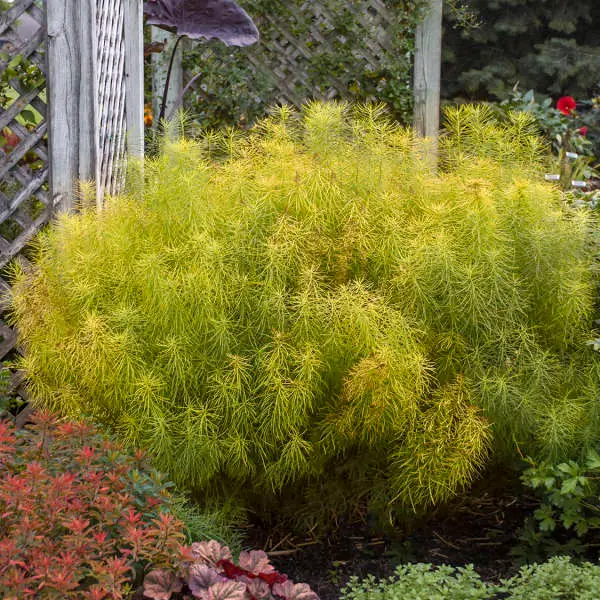
A slow grower, it may take 1 to 2 years before this plant’s true beauty can be seen. It forms erect clumps up to 2 to 3 feet tall and wide with feathery green foliage, making it an excellent backdrop for low-growing annuals and perennials.
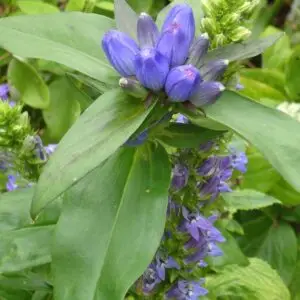
In the spring it produces clusters of blue star-like flowers followed by slender, elongated seed pods. It is prized for its great fine texture and bright yellow fall color.
Blue star is easily grown in average, medium, well-drained soil in full sun to part shade. It will tolerate poor soils and some drought. The plant will become floppy if grown in too much shade or too rich soils. Use in borders, rock gardens, open woodlands, and in mass plantings. Named perennial of the year in 2011 by the Perennial Plant Association.
Use this plant in borders or groups of cottage, rock or pollinator gardens.
Eastern Bluestar is a host for the Snowberry Clearwing, and is potentially a host for Swallowtail butterfly species.