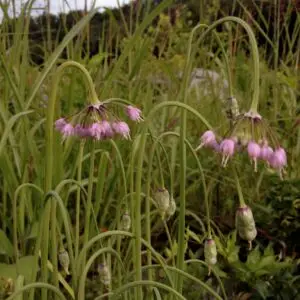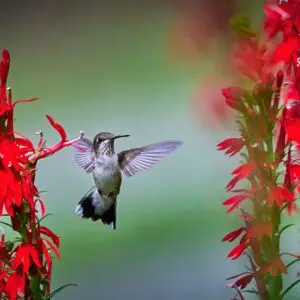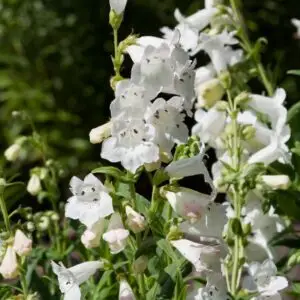
| Size | Trade Gallons, Two Gallons, Three Gallons |
|---|
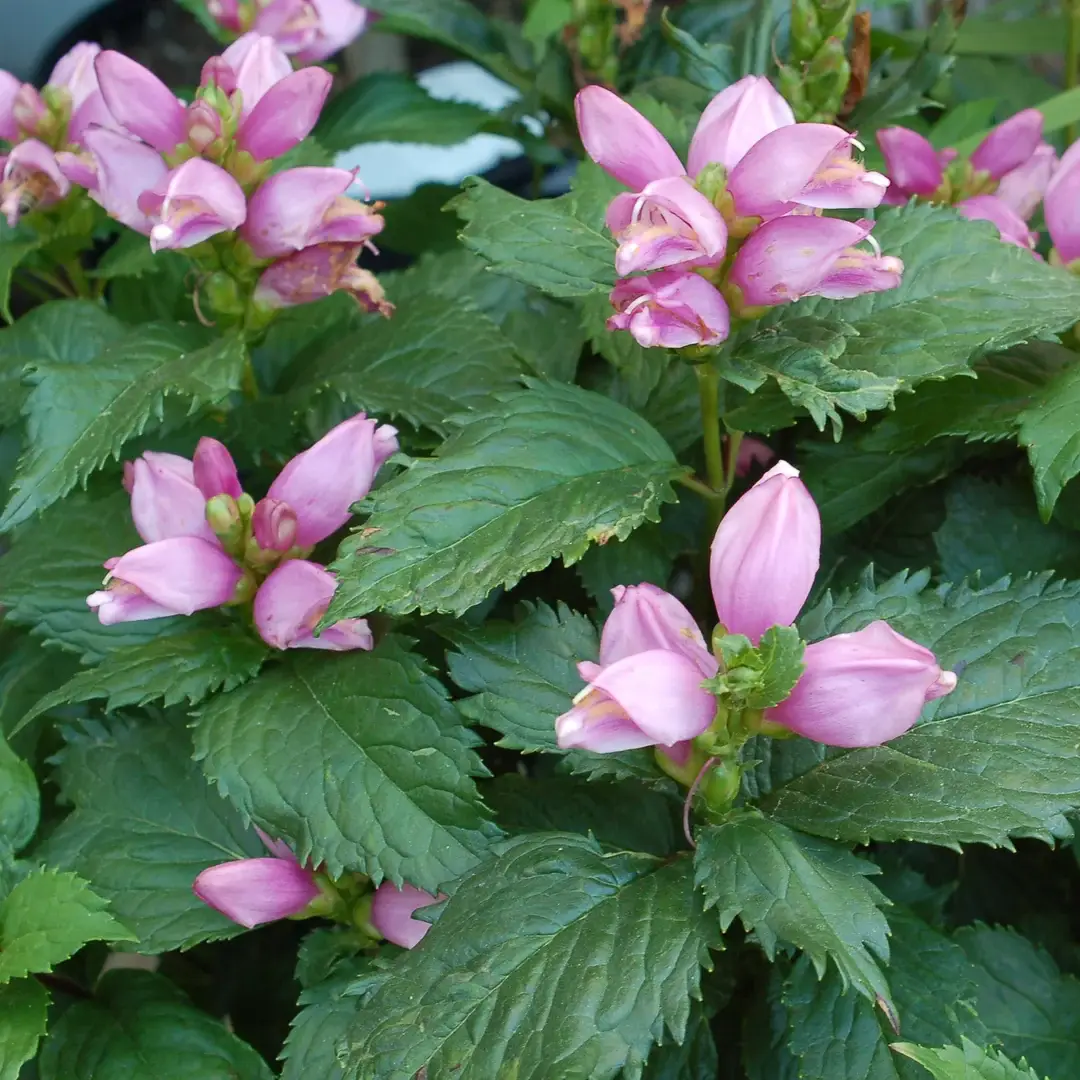
Chelone lyonii ‘Hot Lips’ – Hot Lip’s Turtlehead(BTF.DR.H.HMR.NB)
Ecosystem Services:
(B)-Birds (B&B)-Birds & Butterflies
(BTF)-Butterflies (BW)-Black Walnut Resistant
(DR)-Deer Resistant (DRGHT)-Drought Resistant
(EC)-Erosion Control (EVR)-Evergreen
(FC)-Fall Color (FRG)-Fragrant
(GRD)-Groundcover (H)-Host plant
(HMR)-Hummingbirds (M)-Mammals
(MTH)-Moths (N)-Nectar
(NB)-Native Bees (NST)-Nesting Material
(OP)-Other pollinators (RR)-Rabbit Resistant
(SHWY)-Showy (SPC)-Specimen Plant
Pink Turtlehead is a native wildflower with a very tidy clumping habit. It is in the figwort family and It is found in rich, moist soils in sun to part shade in wet woods and along streams in the southern Appalachian Mountains. Even though it’s native range is small it is adaptable to home gardens and has naturalized in other areas.
It does best in cool climate summers in part shade with protection from the hot afternoon sun. The more shade it is grown in the more likely it will need to be staked. Pinch stems to promote a busier growth. Plant with plenty of organic matter in medium to wet soils. Deer resistant.
The deep pink blooms appear late summer into fall and are on tightly clustered terminal racemes. The blooms are similar to snapdragons in appearance.
Works well in a woodland setting and moist sites along bogs, ponds or streams. They can be used in borders and mass plantings as long as the moisture requirements are met.
Deer Resistant! Host plant for the Baltimore Checkerspot and the Common Buckeye Butterfly.