| Size | Trade Gallons, Two Gallons, Three Gallons |
|---|
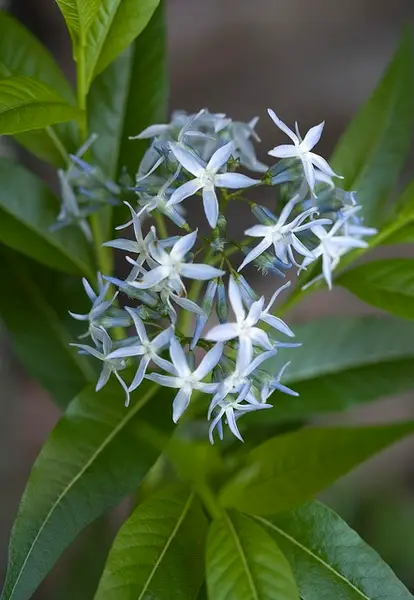
Amsonia tabernaemontana – Eastern Bluestar(B&B.DR.DRGHT.H.HMR.MTH.OP.RR)
$15.00
Ecosystem Services:
(B)-Birds (B&B)-Birds & Butterflies
(BTF)-Butterflies (BW)-Black Walnut Resistant
(DR)-Deer Resistant (DRGHT)-Drought Resistant
(EC)-Erosion Control (EVR)-Evergreen
(FC)-Fall Color (FRG)-Fragrant
(GRD)-Groundcover (H)-Host plant
(HMR)-Hummingbirds (M)-Mammals
(MTH)-Moths (N)-Nectar
(NB)-Native Bees (NST)-Nesting Material
(OP)-Other pollinators (RR)-Rabbit Resistant
(SHWY)-Showy (SPC)-Specimen Plant
Bluestar is a native herbaceous perennial that is found most often in wet, sandy, rich, open and rocky woods and thickets. It has an erect, clump-forming growth pattern. Clusters of 3/4″, light blue, star-like flowers open in late spring atop erect, leafy stems. Its narrow, willow-shaped, dull green foliage may turn yellow in fall. The plant can be cut close to the ground or left for winter interest.
Grows best in full sun. Where this is not possible, the plant may need to be staked due to its floppy form. Cutting the stems back after flowing will create a more rounded, neater appearance.
Drought tolerant once established.
One of our most beautiful native species, bluestar makes a delicate display from the mountains to the coast. The light blue flowers are followed by elongated, pod-like fruits containing hard, black seeds that can be used for propagation. This plant is resistant to damage by deer and other herbivores due to the foliage containing a toxic white latex.
This plant was selected as the 2006 NC Wildflower of the Year.
Eastern Bluestar is a host for the Coral Hairstreak butterfly, the Snowberry Clearwing, Great Ash Sphinx and Northern Crescent Moths. It is also highly deer and rabbit resistant and serves as an early Nectar source for Native Bees in the Spring!