| Size | Trade Gallons, Two Gallons, Three Gallons |
|---|
Mitella diphylla – Bishop’s Caps (BTF.D.HMR.NB.OP.RR)
$20.00
Ecosystem Services:
(B)-Birds (B&B)-Birds & Butterflies
(BTF)-Butterflies (BW)-Black Walnut Resistant
(DR)-Deer Resistant (DRGHT)-Drought Resistant
(EC)-Erosion Control (EVR)-Evergreen
(FC)-Fall Color (FRG)-Fragrant
(GRD)-Groundcover (H)-Host plant
(HMR)-Hummingbirds (M)-Mammals
(MTH)-Moths (N)-Nectar
(NB)-Native Bees (NST)-Nesting Material
(OP)-Other pollinators (RR)-Rabbit Resistant
(SHWY)-Showy (SPC)-Specimen Plan
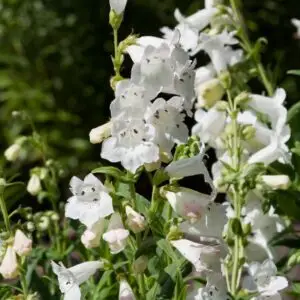
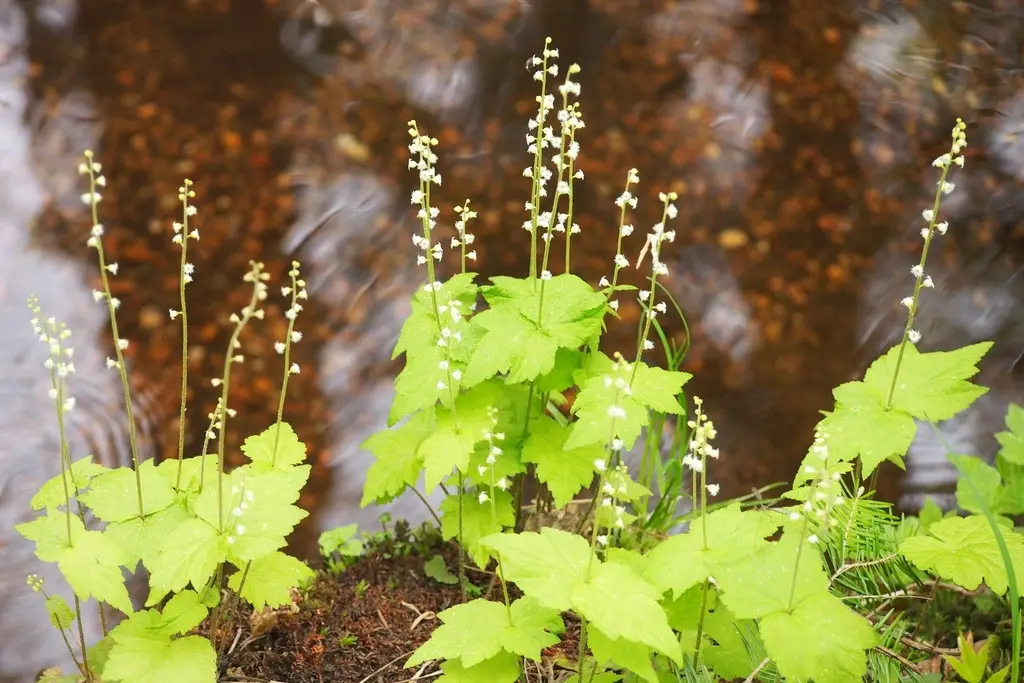
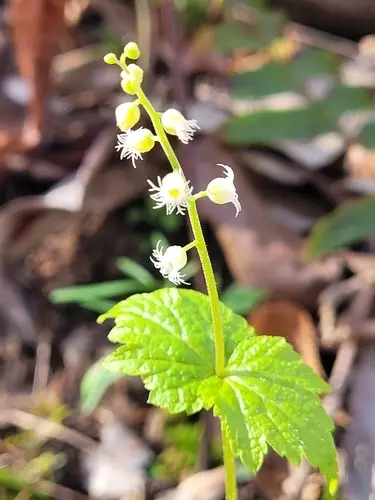
Bishop’s Cap is a flowering, herbaceous perennial native to North America. It is a small plant, reaching about a foot in height or width. This slender, woodland plant with tiny white, fringed flowers of 5 delicate petals blooms in the spring. It has basal leaves that are heart-shaped and hairy-stemmed as well as a pair of similar, but stemless, leaves two-thirds up the flower stalk.
Bishop’s Cap prefers a rich, moist, woodland setting where the soil is organically rich, acidic, well-drained, and consistently moist and there is abundant shade. It can tolerate drier soils or full shade conditions. The root system can produce vegetative colonies from rhizomes. The plant self-sows in a rich soil and can spread quickly.
The flowering stalk has 1/8 inch white flowers spaced up to 1″ apart along the stem and give the appearance of snowflakes. They are best viewed with a magnifying glass or hand lens to appreciate the geometry of the blossom. Bishop’s Cap can be slow to establish and is picky about its growing conditions. Once it is settled in with the right level of shade and moisture, it can become a jewel in a spring shade garden. Because of the small flower size, plant where the flowers can be enjoyed up close.
Deer and Rabbit Resistant!