| Size | 4" Pots for Preorder Only, Trade Gallons, Two Gallons, Three Gallons |
|---|
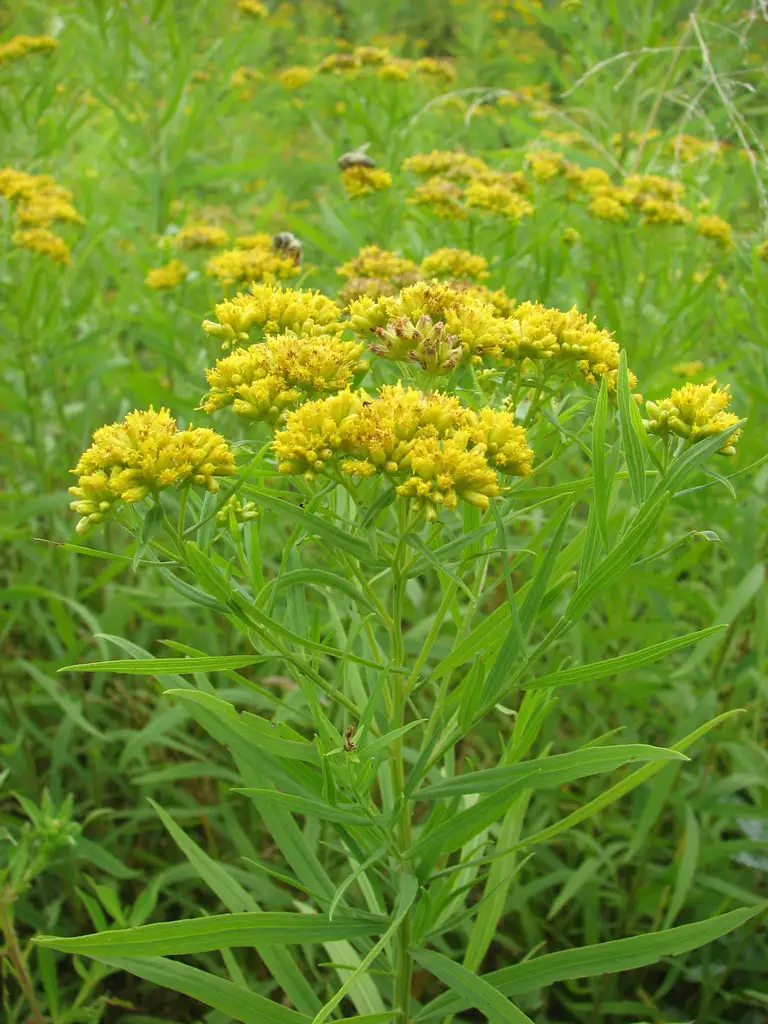
Euthamia graminifolia – Grassleaved Goldenrod(B&B.DR.EC.GRD.H.M.NB.OP)
$15.00
Ecosystem Services:
(B)-Birds (B&B)-Birds & Butterflies
(BTF)-Butterflies (BW)-Black Walnut Resistant
(DR)-Deer Resistant (DRGHT)-Drought Resistant
(EC)-Erosion Control (EVR)-Evergreen
(FC)-Fall Color (FRG)-Fragrant
(GRD)-Groundcover (H)-Host plant
(HMR)-Hummingbirds (M)-Mammals
(MTH)-Moths (N)-Nectar
(NB)-Native Bees (NST)-Nesting Material
(OP)-Other pollinators (RR)-Rabbit Resistant
(SHWY)-Showy (SPC)-Specimen Plant
Grass-Leaved Goldenrod, Euthamia graminifolia, can grow as a slender plant, to have a bushy, branching appearance. Grass-Leaved Goldenrod is named after its defining characteristic of having narrow leaves along its stem. It also has a rounded flat top cluster of 20 to 35 small, shiny yellow flowers that make it unique. This plant can be easy to grow in the right area, but has a tendency to get aggressive in moist sunny places. It also does sometimes have trouble competing against Canada Goldenrod and some other forbs.
The smaller flowers of this plant attract many insects like butterflies, moths, long tongued bees, short tongued bees, beetles, etc; Chauliognathus pennsylvanicus (Goldenrod Soldier Beetle) and Epicauta pensylvanica (Black Blister Beetle) are the most attracted to this plants flowers! Swamp Sparrows and Eastern Goldfinches have been known to feed on the seeds of this plant as well.
Grass-leaved Goldenrod is a rhizomatous, sometimes aggressive species and therefore may not be suitable for small landscape plantings. Although it prefers wet soils in full sun, it will tolerate drier soils and partial shade. This species is not a true goldenrod, and for that reason it is now classified in a different genus as Euthamia graminifolia.
Host plant ffor at least 10 specialized bees and various moths, including the Epiblema desertana.