
| Size | Trade Gallons, Two Gallons, Three Gallons |
|---|
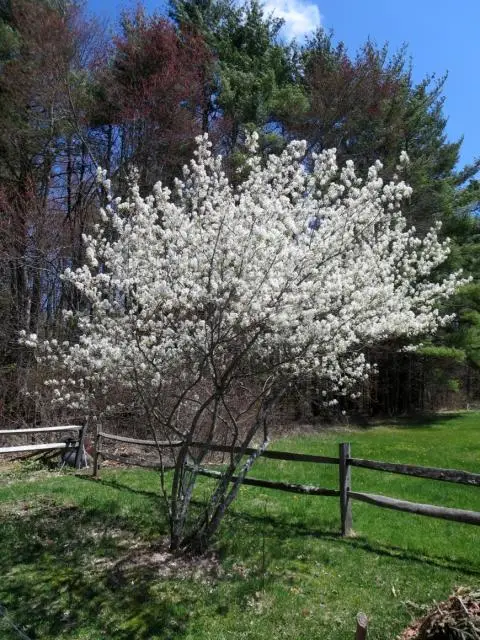
Amelanchier arborea – Downy Serviceberry (B&B.DR.DRGHT.FC.H.M.NB.OP.W)
Ecosystem Services:
(B)-Birds (B&B)-Birds & Butterflies
(BTF)-Butterflies (BW)-Black Walnut Resistant
(DR)-Deer Resistant (DRGHT)-Drought Resistant
(EC)-Erosion Control (EVR)-Evergreen
(FC)-Fall Color (FRG)-Fragrant
(GRD)-Groundcover (H)-Host plant
(HMR)-Hummingbirds (M)-Mammals
(MTH)-Moths (N)-Nectar
(NB)-Native Bees (NST)-Nesting Material
(OP)-Other pollinators (RR)-Rabbit Resistant
(SHWY)-Showy (SPC)-Specimen Plant
The Downy serviceberry, is a deciduous tree in the rose family, native to eastern North America. It typically grows on wooded slopes and cliffs, open woods, wooded bluffs, rocky woodlands, limestone glades, riverbanks, and edges of swamps. It is not frost tender.
Downy serviceberry grows in a wide range of cultural conditions: in full sun to partial shade and acidic to neutral, sandy, loam, or clay soil that is moist and well drained, but occasionally wet or dry. It has a multistemmed habit as a small tree or, if the root suckers are not removed, it will attain a more shrubby like form. Typically growing 15 to 25 feet tall with a narrow, rounded form, it can reach heights of 40 feet in the wild. The trunk can range from 6 to 18 inches.
In the spring, fragrant five-petaled, white flowers mature, followed by finely toothed leaves with a hairy underside. The bark is smooth when young. As the tree ages, long, vertical splits and furrows develop. The small tree produces a red to purple berry that matures in the late summer to fall. The berries have some resemblance to blueberries. It attracts bees, butterflies, and other pollinators, as well as songbirds and small mammals.
The Downy Serviceberry is a workhorse of a host plant, hosting over 100 species of butterflies and moths. This includes the Red-Spotted Purple, Striped Hairstreak, and Small-eyed Sphinx Moth.
It also provides early spring nectar for native bees, and berries for birds!
Only logged in customers who have purchased this product may leave a review.


Reviews
There are no reviews yet.