| Size | Trade Gallons, Two Gallons, Three Gallons |
|---|
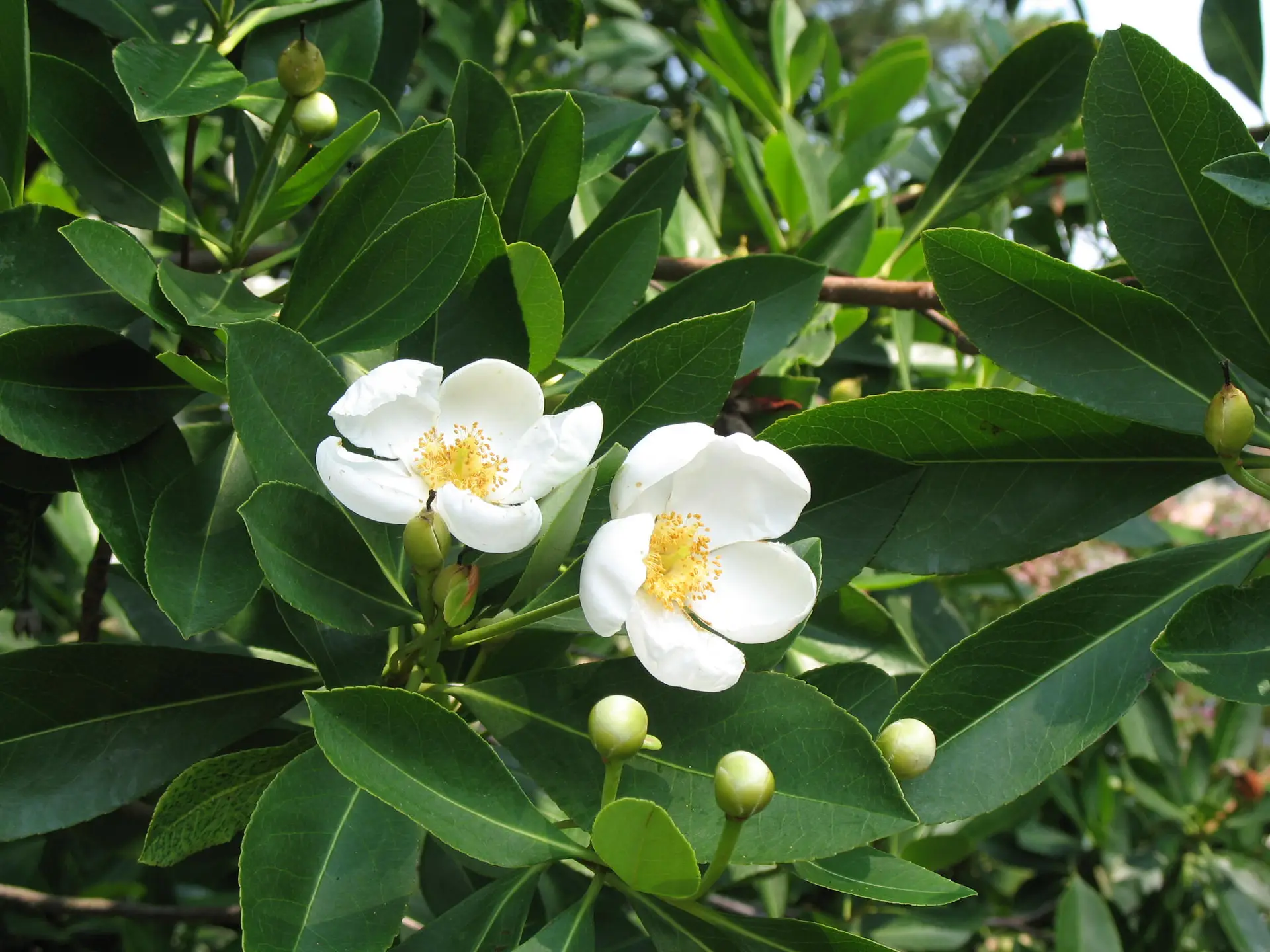
Gordonia lasianthus – Loblolly Bay(B&B.DR.DRGHT.EVRGRN.MTH.NB.OP.RR)
Price range: $35.00 through $45.00
Ecosystem Services:
(B)-Birds (B&B)-Birds & Butterflies
(BTF)-Butterflies (BW)-Black Walnut Resistant
(DR)-Deer Resistant (DRGHT)-Drought Resistant
(EC)-Erosion Control (EVR)-Evergreen
(FC)-Fall Color (FRG)-Fragrant
(GRD)-Groundcover (H)-Host plant
(HMR)-Hummingbirds (M)-Mammals
(MTH)-Moths (N)-Nectar
(NB)-Native Bees (NST)-Nesting Material
(OP)-Other pollinators (RR)-Rabbit Resistant
(SHWY)-Showy (SPC)-Specimen Plant
Loblolly Bay is an evergreen tree native to the Southeastern United States, commonly found in the coastal plains and southern Tidewater region of North Carolina, in moist but not wet areas.
In summer it has spectacular white Camellia-like flowers that are fragrant and can continue through frost. Loblolly Bay, often called Red Bay, reaches a height of 35 to 70 feet with a trunk diameter of 20 inches and a columnar or pyramidal, very open growth habit with a narrow, compact crown of spreading branches. The eventual size of the tree is dependent on soil moisture. Although evergreen, several individual leaves at a time will turn a brilliant scarlet color in the fall.
Use this plant in wet but well-drained areas in sun to partial sun conditions. Symmetric, narrow conical shape. Depending on soil conditions, may take a shrubby form or grow to a sizeable tree.
It can be grown as a large, multi-stemmed shrub or as a small tree. Pruning during winter dormancy by removing crossed branches will help to maintain the plants’ health. Does best when protected from direct afternoon sunlight. Morning sun with afternoon shade is preferred.