| Size | 4" Pots for Preorder Only, Trade Gallons |
|---|
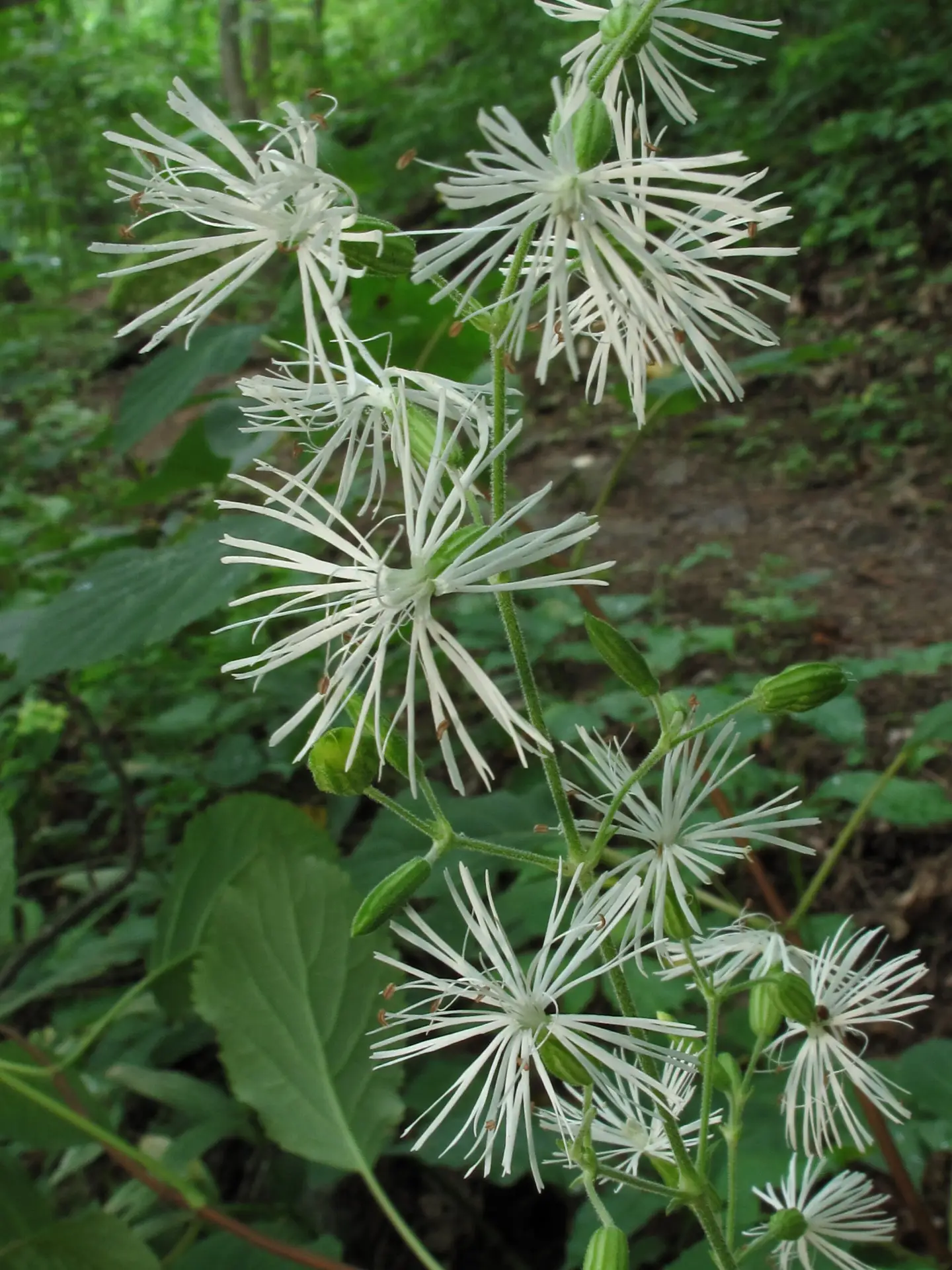
Silene ovata – Mountain Catchfly ( B&B.DRGHT.GRDCVR.HMR.M.NB.OP.SHWY)
$20.00
Ecosystem Services:
(B)-Birds (B&B)-Birds & Butterflies
(BTF)-Butterflies (BW)-Black Walnut Resistant
(DR)-Deer Resistant (DRGHT)-Drought Resistant
(EC)-Erosion Control (EVR)-Evergreen
(FC)-Fall Color (FRG)-Fragrant
(GRD)-Groundcover (H)-Host plant
(HMR)-Hummingbirds (M)-Mammals
(MTH)-Moths (N)-Nectar
(NB)-Native Bees (NST)-Nesting Material
(OP)-Other pollinators (RR)-Rabbit Resistant
(SHWY)-Showy (SPC)-Specimen Plant
Silene ovata is rare throughout its range. It occurs from southwest Virginia, south to Georgia, and west to southeast Illinois and northern Arkansas.
The habitat for Mountain Catchfly is in circumneutral soils of the woodlands and the forests, especially over mafic or calcareous rocks, mostly at medium elevations in the mountains (Weakley 2004). In Tennessee, it occurs in a variety of open or forested sandy or pebbly habitats including floodplains (Gay et al. 1996).
Globally, this species is ranked as G3-Vulnerable. This means it is at moderate risk of extinction due to its limited range, few documented populations, and habitat loss. Most populations are small and much of its habitat has been lost. Threats include logging, grazing, trampling, road construction, and right-of-way maintenance.