
| Size | Trade Gallons, Two Gallons, Three Gallons |
|---|
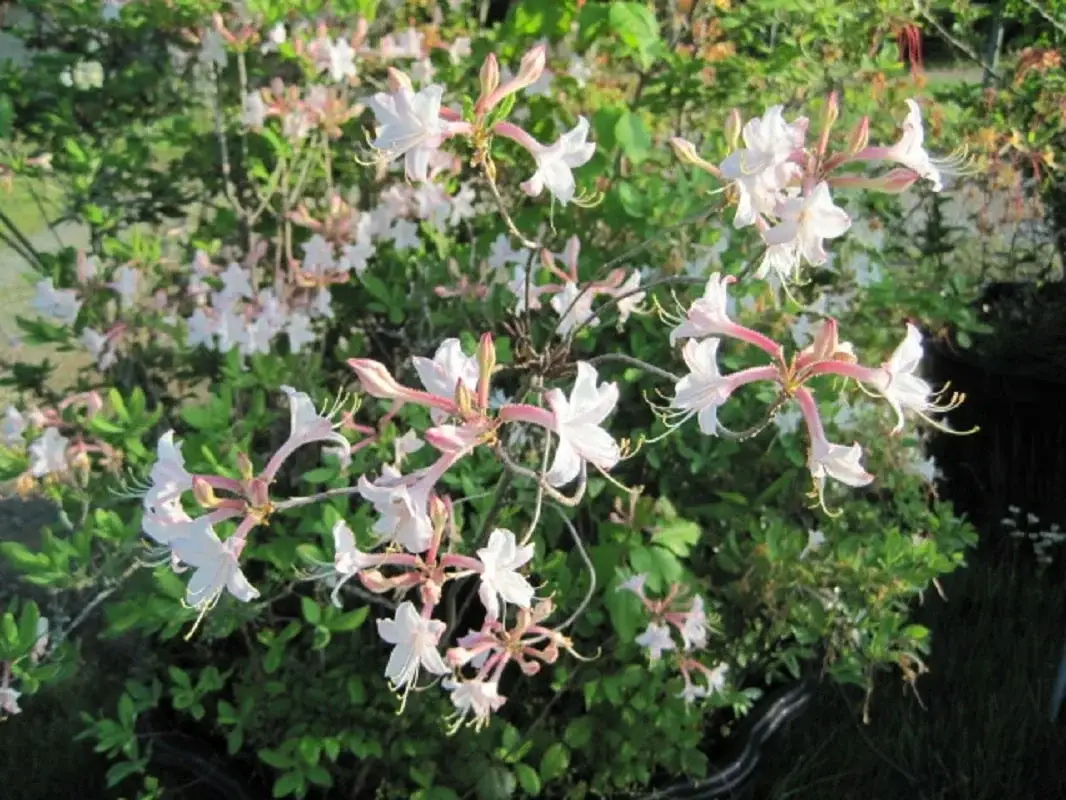
Rhododendron atlanticum – Dwarf Azalea (B&B.DR.FRG.H.HMR.M.NB.OP.RR.SHWY.SPC)
Ecosystem Services:
(B)-Birds (B&B)-Birds & Butterflies
(BTF)-Butterflies (BW)-Black Walnut Resistant
(DR)-Deer Resistant (DRGHT)-Drought Resistant
(EC)-Erosion Control (EVR)-Evergreen
(FC)-Fall Color (FRG)-Fragrant
(GRD)-Groundcover (H)-Host plant
(HMR)-Hummingbirds (M)-Mammals
(MTH)-Moths (N)-Nectar
(NB)-Native Bees (NST)-Nesting Material
(OP)-Other pollinators (RR)-Rabbit Resistant
(SHWY)-Showy (SPC)-Specimen Plant
Coastal azalea is a compact, woody, deciduous shrub in the blueberry family. Typically, it matures to 2 to 3 feet tall and wide, but infrequently rises to as much as 6 feet tall. This azalea is native to coastal plain areas from New Jersey and Pennsylvania south to Georgia.
It prefers full sun to partial shade, consistent moisture, and well-drained sandy soil. Mulching the soil with needles, bark, or compost will help it stay moist and manage a consistent soil temperature. This plant spreads by underground stolons. Place plants where they can be protected from strong winter winds and frosts as leaves can burn and flowers can be damaged.
This species is often used in azalea breeding programs because of its potent flower fragrance. The showy flowers attract bees, butterflies, and hummingbirds.
In the landscape, use coastal azalea as an accent, border, or hedge in a pollinator, native, or woodland garden. It may also be grown in a container indoors or outside. Prune rhododendrons and azaleas after they bloom to preserve the current season’s bloom, and allow time for the plant to produce flower buds for next year’s bloom. Rhododendrons and azaleas set next year’s flower buds by mid to late summer.
All parts of the Rhododendron genus contain the poisons Andromedotoxin, Grayantoxin.
As a host plant, Rhododendron atlanticum can be a food source or a place where certain insects lay their eggs or develop.
Members of the genus Rhododendron support the following specialized bee: Andrena (Andrena) cornelli, and bumble bees.
Only logged in customers who have purchased this product may leave a review.
Related products
-
Aronia arbutifolia – Red Chokeberry (B&B.DR.DRG.H.M.OP)
Price range: $25.00 through $40.00


Reviews
There are no reviews yet.